
The real cost of mobile lending in Kenya: what the numbers don't show upfront
There is a particular kind of fight in boxing — I am told, I want to be clear that I have never personally entered a ring, and at my current weight I do not intend to — where one fighter spends the early rounds doing almost nothing. He bobs. He weaves. He absorbs a few jabs and smiles as if they tickled. The crowd grows restless. The commentators mutter about passivity. And then, somewhere around the eighth round, the opponent who has been doing all the punching suddenly cannot lift his arms, and the man who was "doing nothing" delivers three crisp combinations and collects the purse.
The mobile lending industry in Kenya is the fighter who does nothing in the early rounds.
The offer arrives on your phone, usually at a time when you are fairly vulnerable — it is the third week of the month, the electricity token has run out, and school fees are due on Friday — and it is clean. Simple. Practically cheerful. "You qualify for up to Sh50,000. Apply now." No queues. No three-guarantors-and-a-title-deed. No loan officer peering at you over reading glasses asking where you were employed in 2019. Just a tap, a PIN, and the money is in your M-Pesa in under a minute. The fee displayed is modest. The repayment period is clear. The whole transaction feels, in the language of a generation that grew up on mobile money, frictionless.
And then the eighth round begins.
Which brings me to what I have spent the better part of this year doing in my consulting work with digital lenders — not selling you on mobile credit, which sells itself perfectly well without my help, but pulling apart the pricing structures, reading the terms and conditions that nobody reads, and trying to understand what a Sh10,000 loan actually costs a borrower named Moraa by the time she has fully repaid it.
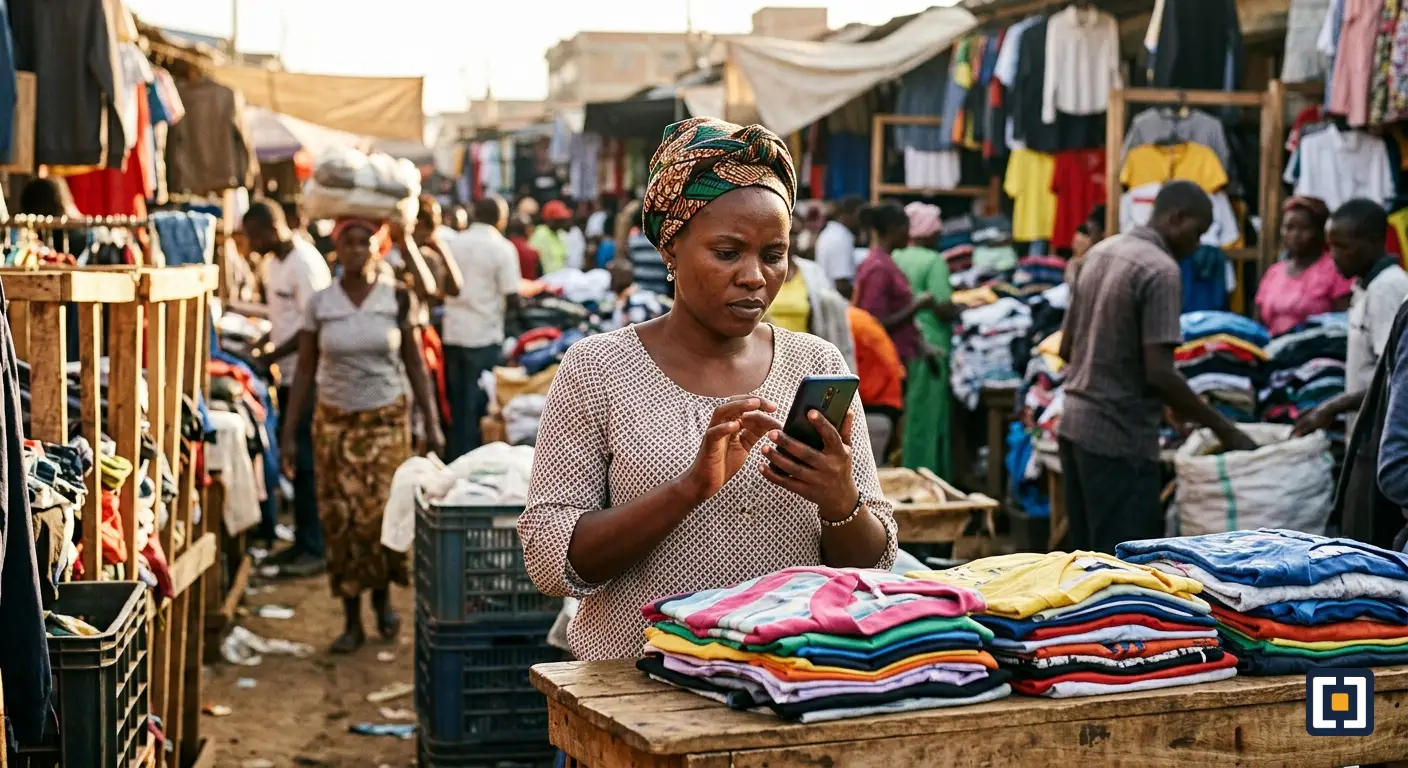
Moraa, for those who have not met her in this column before, is thirty-one years old. She runs a second-hand clothes business — mitumba — in Gikomba market. She does not have a payslip. She has an M-Pesa statement, a KRA Personal Identification Number (PIN), and a credit score built from three years of borrowing and repaying mobile loans, which she has managed with the discipline of someone who understands that her score is her collateral. She is, in the language of financial inclusion, exactly the borrower that mobile lending was built for. She is also, in my considered opinion, the borrower who needs to read this column most urgently.
Let me show you what Moraa's Sh10,000 loan actually costs.
The facility fee — the number displayed prominently when she taps "apply" — is, let us say, 9 per cent for a thirty-day loan. That is Sh900. So far so clear. But depending on which lender she is using, there is also an excise duty levied on the facility fee at 20 per cent — that is another Sh180, bringing the total to Sh1,080. Some lenders add a loan insurance charge, typically between 0.5 and 1 per cent of the principal, which on Sh10,000 is another Sh50 to Sh100. A few add what they call a "registration" or "account maintenance" fee for first-time borrowers or borrowers accessing a new loan tier. And if Moraa — because it is Gikomba and a supplier arrived unexpectedly with a bale she could not pass up — needs even three extra days beyond the thirty-day window, she will find that the rollover or late payment fee on many platforms is between 1 and 2 per cent of the outstanding balance per day.
Let us do the arithmetic, because the arithmetic is the whole story.
Sh10,000, thirty-one days, with a 9 per cent facility fee, 20 per cent excise duty on the fee, 1 per cent insurance, and a single three-day rollover at 1.5 per cent per day on the outstanding balance: the facility fee is Sh900, excise duty is Sh180, insurance is Sh100, and the rollover penalty is Sh450. Total cost of the loan: Sh1,630. On a Sh10,000 principal. In thirty-one days. That is an effective cost of 16.3 per cent for one month, which — and I want you to sit with this number, good people — annualises to somewhere in the region of 196 per cent per year.
One hundred and ninety-six per cent per annum.
The annual percentage rate (APR), which is the number that would allow Moraa to compare the mobile loan against a bank overdraft or a SACCO loan or the cost of buying on credit from her supplier, is almost never the number quoted upfront. The number quoted upfront is the facility fee. The facility fee is the jab in round one that looks harmless. The APR is the eighth round.
Why does this matter? Because Moraa is not borrowing Sh10,000 as a financial experiment. She is borrowing it because she needs it, and she will repay it because her credit score is the most valuable financial asset she owns, and she cannot afford to lose it. The cost of the loan comes out of her working capital — the float she uses to buy stock, to pay her assistant on Fridays, to cover the cost of transporting a bale from the port. When the effective cost of short-term credit is running at north of 150 per cent per annum on a rolled-over facility, a portion of Moraa's business is quietly working for the lender rather than for Moraa. She repays. She re-borrows. She repays. She re-borrows. The bale moves. The debt stays.
I want to be fair to the industry, and I will be, because fairness is also part of my job. Mobile credit reaches borrowers that the formal banking sector has spent sixty years failing to reach. Moraa has no payslip, no title deed, no guarantors, and no relationship with a branch manager. Before M-Shwari and its various successors and competitors arrived, the choice available to her in the third week of the month with a supplier at the gate was either the chama float — if her turn had come — or a moneylender who would make the mobile lender look like a philanthropist. The industry exists because there was a real, large, and badly served need. Period.
But let me say, at the risk of sounding like the sort of person who spoils a perfectly good product launch: there is a difference between a high-cost product and a product whose costs are incompletely disclosed. The first is an economic reality in a high-risk, high-overhead lending segment. The second is a design choice.
In these dying column minutes let me draw your attention to something the Central Bank of Kenya (CBK) has been wrestling with since it was given oversight of digital lenders through the Central Bank of Kenya (Amendment) Act 2021. The CBK has, to its credit, been pushing for standardised disclosure — the requirement that lenders state the total cost of credit, including all fees and charges, in a form that allows comparison. The Digital Credit Providers (DCP) Regulations of 2022 require licensed lenders to disclose the APR. They require a cooling-off period. They require fair and transparent pricing. They are, on paper, a fairly comprehensive framework for the protection of Moraa's interests.
The question — and I am hazarding a guess here based on what I see in my consulting work — is whether the disclosure is happening in a form that Moraa can actually use when she is standing in Gikomba at 7am with a supplier who will not wait, and a phone screen telling her she qualifies for Sh10,000, and the only number displayed prominently enough to read without her glasses is the facility fee.
The fighter in round one looks very reasonable. By round eight, Moraa is the one who cannot lift her arms.
Which is why, before you tap "apply," I would like you to ask one question — the same question that took me ten years in banking to ask by reflex and another year of consulting to learn to ask on behalf of people like Moraa: not "what is the fee?" but "what will I actually pay, in total, in shillings, by the time this is over?"
The answer, good people, is always in round eight.